

.png?width=596&name=Blog%20(300%20x%20150%20px).png)

The rise of advanced AI tools presents new challenges for educators, especially when it comes to academic honesty. How can teachers encourage students to use AI responsibly as a learning support, yet still ensure the work they submit is their own, and the learning we’re facilitating is happening? ThinkCERCA offers powerful features that help teachers combat plagiarism and AI misuse by fostering genuine student investment and providing robust monitoring tools.
1. The Power of Process-Based Writing
Plagiarism often happens when students face a blank page and lack investment in the topic. ThinkCERCA addresses this by implementing a process-based approach to writing. Students complete a proven, step-by-step process rooted in cognitive science. When students engage in our social and collaborative approach to literacy, they build the knowledge they may otherwise seek through AI. Based on our research-based multistep close reading and writing process, they have something to say about the topics they are writing about and are less likely to seek their first draft from AI. Teachers can later revisit each step to see the authentic work.
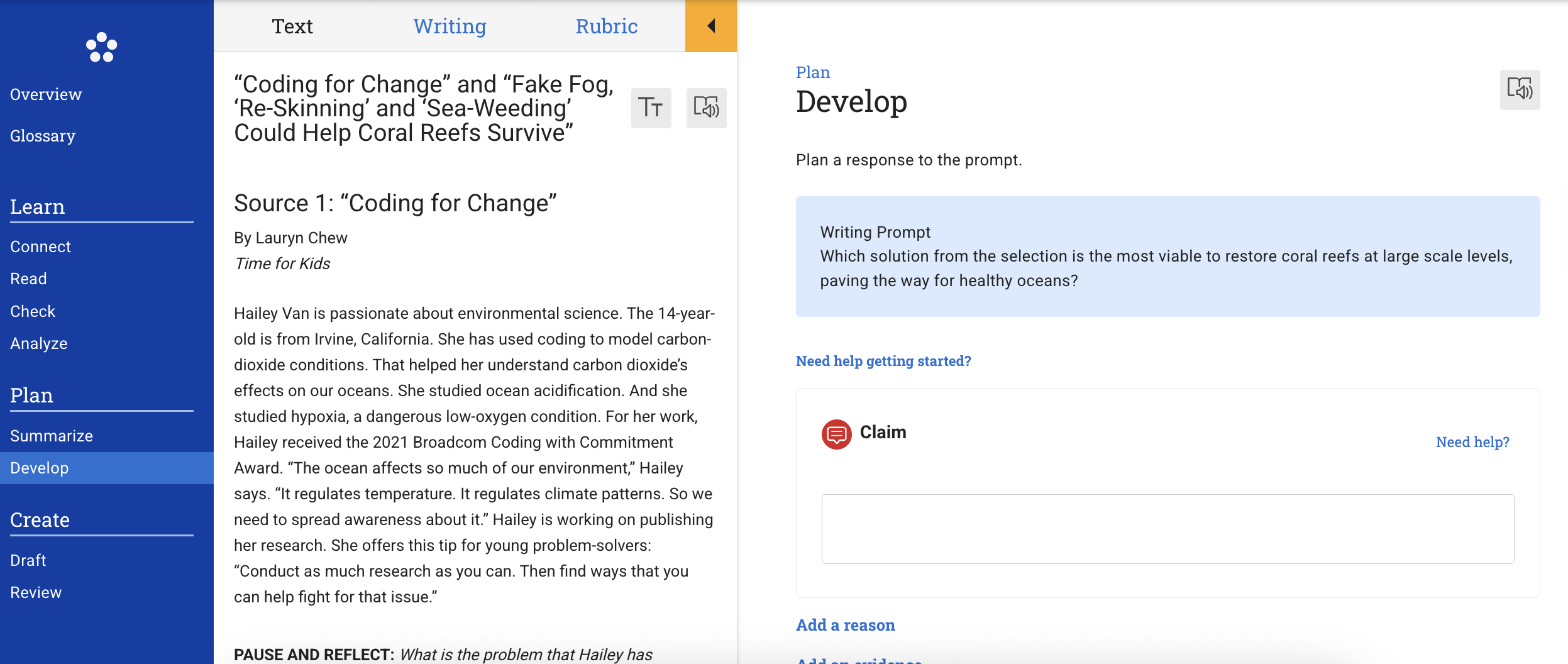
2. Motivational Feedback, Not Replacement Text
Effective feedback should encourage a student's voice, not replace it. Our feedback is designed to improve student thinking, provide nurturing and actionable feedback, and increase student investment in their own voice. This design ensures that students see and value their own ideas in their final work, reinforcing a sense of ownership. 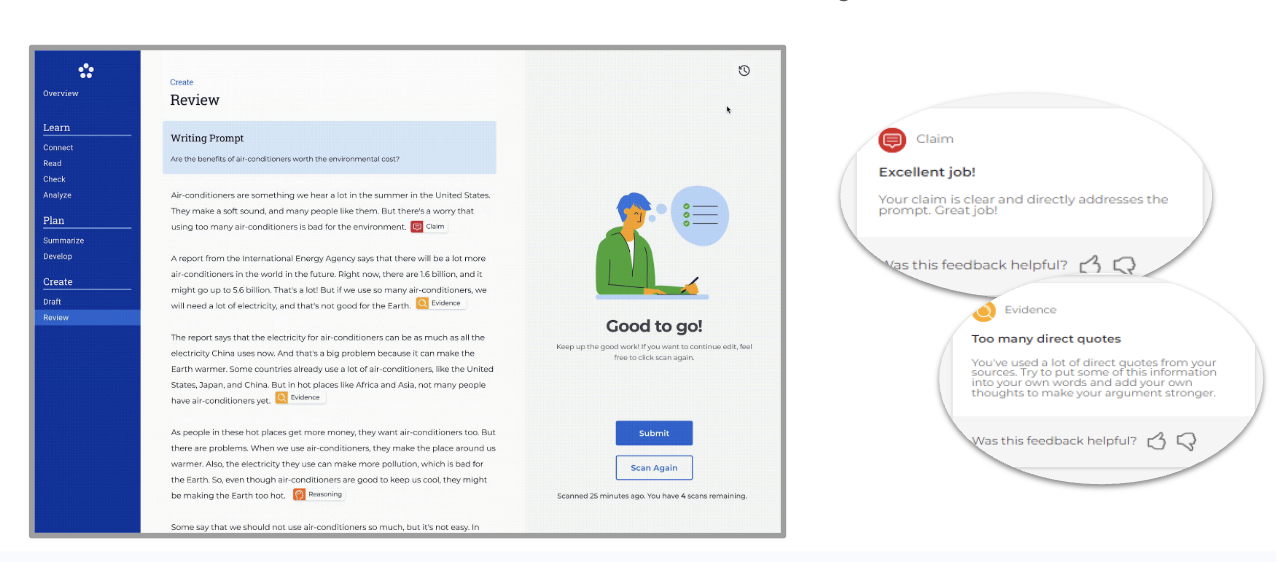
3. ThinkCERCA’s Plagiarism Detection System
For direct monitoring, ThinkCERCA includes a traditional plagiarism detection system. The teacher dashboard provides clear visibility, indicating both the likelihood and the percentage of content that is potentially AI-generated. This gives teachers a quick, data-driven assessment to guide their review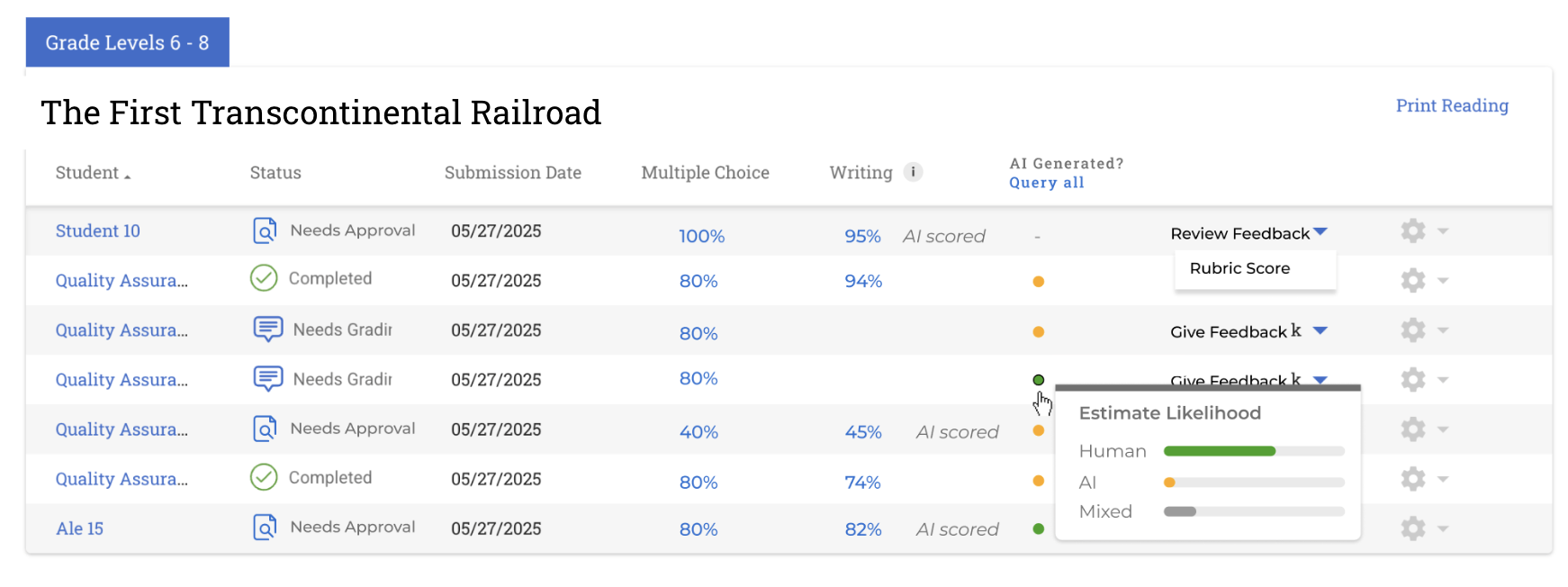
4. Reporting that Provides Visibility into Writing Samples Across Time
With our reporting, teachers, principals, and district leaders can see the first and most recent samples of student writing. ThinkCERCA’s one-of-a-kind before and after writing samples provide snapshots of student writing proficiency in a way that even a third grader can understand.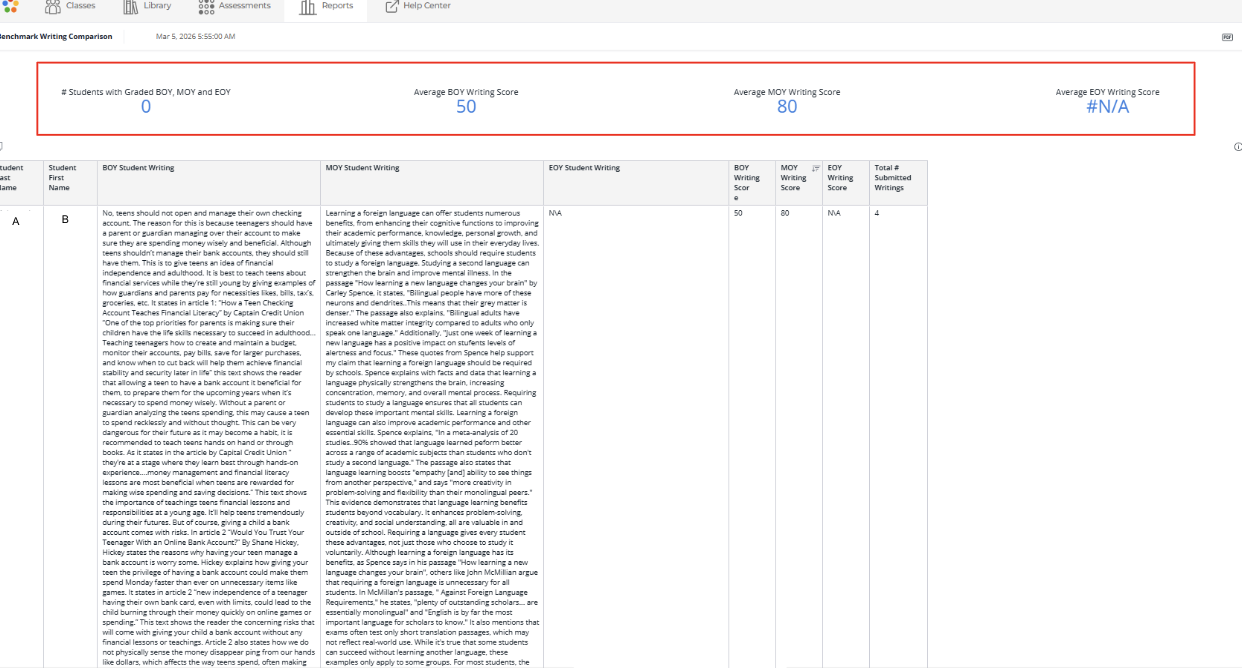 The best way to spot inauthentic work is to know what authentic work looks like. New reports show before-and-after writing samples, providing baselines of a student’s typical writing style and authentic work. Educators and teams can scroll through an entire class, grade, or school to monitor student growth and, crucially, to monitor for sudden, uncharacteristic shifts in writing that may indicate plagiarism.
-4.png)
Eileen taught English for 15 years and was the founding English Department Chair at Walter Payton College Prep as well as the author of
360 Degrees of Text (NCTE, 2011).
As the Director of Curriculum and Instruction for over 100 of Chicago’s highest performing schools, Eileen became passionate about the role technology could play in education in the 21st century and left CPS in 2012 to develop ThinkCERCA to help all students achieve career and college readiness. ThinkCERCA is one of the top Literacy Courseware Challenge winners (Gates Foundation).